

Minecraft is more than just building and mining. The world feels alive, thanks to its villagers. These villagers are not random NPCs—they have jobs, routines, and unique traits that make villages feel like real communities. Understanding Minecraft villager jobs can change how you play, trade, and even build your world. Whether you’re new or a seasoned player, mastering villager jobs can unlock rare items, efficient trading, and creative gameplay ideas. Let’s explore the full landscape of villager professions, how they work, and the strategies for getting the most out of your village.
What Are Villager Jobs In Minecraft?
Villagers in Minecraft are intelligent mobs found in villages. Each villager can have a profession (job) or be unemployed. A villager’s job controls what they wear, how they behave, and what items they trade. For example, a Farmer trades crops, while a Librarian trades books and enchanted items.
Jobs are determined by job site blocks. These blocks are placed in the village and claimed by unemployed villagers. Each profession has a unique job site block. If a block is destroyed or moved, the villager loses their job until they find another one.
Villager jobs are important because:
- They allow trading for rare or useful items.
- They offer unique gameplay opportunities.
- They help automate farms and resources.
Understanding the details of each job can help players build better villages, get better trades, and even design custom trading halls.
How Villager Jobs Work
A villager’s profession is determined by the job site block they can access. Here’s how the system works:
- Job site blocks: Each job has a block that villagers need. For example, the composter gives the Farmer job.
- Claiming a job: Unemployed villagers will walk to a free job site block and claim the related profession.
- Changing jobs: Villagers can change jobs if their job site block is destroyed or replaced with another type. They must not have traded yet to change jobs.
- Work hours: Villagers work and refresh trades during the day, usually in the morning and afternoon.
Villagers can have one of 13 unique jobs, or be unemployed/nitwit (a nitwit never works). Trading with villagers locks their profession until they die or are zombified.
Full List Of Minecraft Villager Jobs And Job Site Blocks
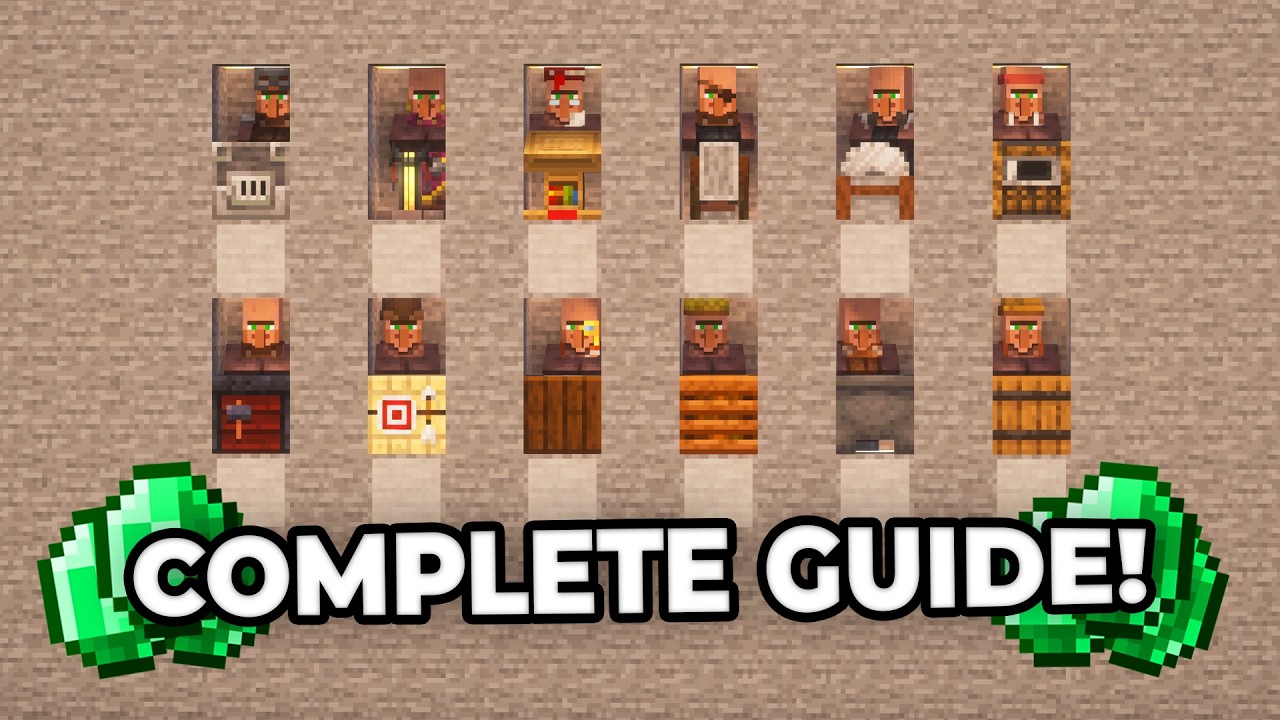
Minecraft has 13 villager jobs. Each profession is linked to a specific block. Here’s a breakdown:
| Job | Job Site Block | Main Trades |
|---|---|---|
| Farmer | Composter | Crops, bread, cookies |
| Librarian | Lectern | Books, enchanted books |
| Cleric | Brewing Stand | Ender pearls, redstone, glowstone |
| Armorer | Blast Furnace | Armor, chainmail, shields |
| Weaponsmith | Grindstone | Weapons, iron, diamond |
| Toolsmith | Smithing Table | Tools, emeralds |
| Butcher | Smoker | Cooked meat, rabbit stew |
| Cartographer | Cartography Table | Maps, banners |
| Fletcher | Fletching Table | Arrows, bows |
| Fisherman | Barrel | Fish, fishing rods |
| Leatherworker | Cauldron | Leather armor, saddles |
| Mason (Stone Mason) | Stonecutter | Stone, bricks |
| Shepherd | Loom | Wool, dyes, beds |
Each job brings unique trades and gameplay advantages. Some jobs, like Librarian or Armorer, are especially valuable for getting rare enchanted items or strong gear.
Jobless Villagers: Unemployed And Nitwits
Not every villager has a job. There are two types of jobless villagers:
- Unemployed: These villagers can take any available job if a job site block is free. They wear brown robes.
- Nitwit: Nitwits cannot work or claim a job. They wear green robes and wander aimlessly.
Unemployed villagers are useful if you want to create new professions. Nitwits, on the other hand, are mostly decorative and cannot be used for trading.
Villager Job Levels And Trade Tiers
Villager jobs are not static. Each working villager has a level:
- Novice
- Apprentice
- Journeyman
- Expert
- Master
Villagers level up by trading. As they gain experience, their trades improve. For example, a novice Librarian may offer plain books, but an expert or master can offer enchanted books.
Here’s how job levels work:
- Trading increases the villager’s experience.
- Higher levels unlock new and better trades.
- Villagers display their level with a colored badge.
This system encourages players to keep trading and building relationships. It’s a smart way to get better items and rare resources.
The Most Useful Villager Jobs For Players
While all villager jobs offer something, some are more valuable for gameplay. Let’s look at the top jobs and why they matter:
- Librarian: Offers enchanted books, making it easy to get rare enchantments like Mending or Efficiency.
- Farmer: Trades crops and food, useful for survival and trading emeralds.
- Armorer: Sells armor, including diamond gear at higher levels.
- Toolsmith: Provides tools, sometimes diamond tools at master level.
- Weaponsmith: Trades weapons, including swords and axes.
Other jobs, like Cleric and Cartographer, also offer unique items. But for most players, Librarians and Farmers are the backbone of a good trading hall.

Credit: www.reddit.com
How To Assign Jobs To Villagers
Assigning jobs is simple but there are tricks to make it efficient:
- Place the job site block near the villager.
- Make sure the villager is unemployed.
- Wait for the villager to approach and claim the block.
If the villager does not claim the block, try removing and replacing it. Sometimes villagers need a clear path or space to reach the block.
Pro Tip: If you want to “reroll” trades, break the job site block and let the villager claim it again. This only works if the villager has not traded yet.
Trading With Villagers: How It Works
Trading is a key part of Minecraft’s economy. Here’s what you need to know:
- Emeralds are the main currency.
- Each profession offers unique trades.
- Trades refresh daily when the villager works at their job site block.
Trading unlocks new items and gives the villager experience. You can trade as much as the villager’s stock allows, and they restock twice a day.
Here’s a quick overview of trading benefits:
- Get rare items (enchanted books, diamond gear)
- Earn emeralds quickly
- Build strong communities and trading halls
Trading also helps villagers level up, giving you better offers.
Villager Job Site Blocks: Crafting And Placement
Each job site block is crafted from basic materials. Here’s a guide to making and placing them:
| Job Site Block | How to Craft | Where to Place |
|---|---|---|
| Composter | 7 wooden slabs | Near crops/farms |
| Lectern | 4 wooden slabs + 1 bookshelf | Library area |
| Brewing Stand | 1 blaze rod + 3 cobblestone | Church or central area |
| Blast Furnace | 5 iron ingots + 3 smooth stone + 1 furnace | Blacksmith area |
| Grindstone | 2 sticks + 2 wooden planks + 1 stone slab | Workshop area |
| Smithing Table | 2 iron ingots + 4 wooden planks | Workshop area |
| Smoker | 4 logs + 1 furnace | Kitchen or food area |
| Cartography Table | 2 paper + 4 wooden planks | Map room |
| Fletching Table | 2 flint + 4 wooden planks | Archery area |
| Barrel | 6 wooden planks + 2 wooden slabs | Fishing dock |
| Cauldron | 7 iron ingots | Leather shop |
| Stonecutter | 1 iron ingot + 3 stone | Mason’s shop |
| Loom | 2 string + 2 wooden planks | Shepherd’s hut |
Place these blocks inside your village where villagers can access them. Make sure paths are clear and blocks are not in locked rooms.
Building A Villager Trading Hall
A trading hall is a custom building where villagers are organized for easy trading. Here’s how to make one:
- Collect and transport villagers (use boats or minecarts).
- Build cells or rooms for each villager.
- Place job site blocks in front of each cell.
- Make sure villagers can access their job block.
- Add beds so villagers can rest and breed.
Trading halls help players get the best trades, reroll offers, and keep villagers safe from zombies and raids.
Advanced Tip: Use glass walls for cells. It keeps villagers visible and safe while making trading easier.
Breeding Villagers For New Jobs
If your village needs more workers, you can breed villagers. Here’s how:
- Place beds for the new villagers.
- Give villagers food (bread, carrots, potatoes).
- When conditions are right, villagers will breed and create baby villagers.
Baby villagers grow up in about 20 minutes. Once they mature, they become unemployed and can take any available job.
How To Change A Villager’s Job
Changing jobs is useful if you want specific trades. Here’s the process:
- Make sure the villager has not traded yet.
- Break their current job site block.
- Place a new job site block nearby.
- Wait for the villager to claim the new job.
If the villager has traded, their job is locked. Only killing or zombifying them will reset the profession, but this is not recommended.
Common Mistake: Trying to change a villager’s job after trading. It won’t work. Always decide on the job before making trades.
Advanced Trading Strategies
Getting the best deals takes skill. Here are advanced tips:
- Reroll trades: If a villager offers poor trades, break and replace their job site block until you get good offers. This works only before trading.
- Cure zombie villagers: If a villager is zombified and cured, their trades become much cheaper.
- Trade discounts: If you defend a village from a raid, villagers offer big discounts.
Hidden Insight: Trading certain items increases the villager’s willingness to breed. For example, trading crops with Farmers can make them breed faster.
Common Mistakes When Managing Villager Jobs
Even experienced players make mistakes. Here are some to avoid:
- Locking trades too early: Don’t trade until you get the offers you want.
- Bad job site block placement: If blocks are too far or hidden, villagers won’t claim them.
- Ignoring work hours: Villagers only work and restock trades during the day.
- Not protecting villagers: Zombies can kill or zombify villagers, ruining your trading hall.
Always plan your village layout and protect villagers with walls, lighting, and iron golems.
Villager Job Mechanics: Behind The Scenes
Minecraft’s villager job system is surprisingly deep. Here are two non-obvious mechanics:
- Work radius: Villagers claim job site blocks within a certain radius. If blocks are outside this area, villagers won’t find them.
- Trade refresh timing: Villagers refresh their trades twice per day, but only if they can pathfind to their job block.
These mechanics mean you need careful placement and timing for maximum efficiency.
Comparing Villager Jobs: Best Trades
Some jobs offer much better trades than others. Here’s a simple comparison:
| Job | Best Trade | Why It Matters |
|---|---|---|
| Librarian | Mending book | Rare enchantment, fixes tools |
| Farmer | Emeralds for crops | Easy emeralds, renewable |
| Armorer | Diamond armor | Strong protection |
| Toolsmith | Diamond tools | Fast mining, durability |
| Cleric | Ender pearls | Needed for End travel |
These trades are often the goal for advanced players. Getting multiple villagers with these jobs makes your village powerful.

Credit: beebom.com
Using Villager Jobs For Automation
Villager jobs are not just for trading. They help automate farms and resources:
- Farmers: Automatically plant and harvest crops if given seeds.
- Fishermen: Fill barrels with fish if there is water nearby.
- Shepherds: Dye and shear sheep for wool.
Automation saves time and lets you focus on building or exploring. Combine villager jobs with redstone machines for even more efficiency.
Rare And Hidden Villager Job Features
Most players know the basics, but there are hidden features:
- Nitwit villagers: These cannot work, but they increase village population for breeding.
- Jobless villagers: Can claim jobs even if you place blocks far from the village, as long as they are within the radius.
- Villager gossip: Villagers remember players who trade or hurt them, affecting prices and behavior.
Understanding these hidden mechanics can help you create advanced villages and trading systems.
How Villager Jobs Affect Village Life
Villager jobs are the heart of a village. They affect:
- Trading and economy: Jobs control what items are available.
- Defense: Some jobs, like Armorer and Weaponsmith, help equip iron golems.
- Breeding and growth: Jobless villagers are needed for breeding.
- Community feel: Jobs make villages lively and realistic.
A smart village layout with diverse jobs creates a thriving community.
Villager Job Changes In Recent Updates
Minecraft updates often change villager jobs. For example:
- 1.14 Village & Pillage update: Added new professions and job site blocks.
- 1.16 Nether update: Improved trade offers and job mechanics.
- 1.20 Trails & Tales update: Tweaked villager behavior and trading.
Always check the latest patch notes for changes. For full update details, see Minecraft Fandom.
Credit: www.youtube.com
How To Protect Your Villager Workforce
Villagers are fragile. Protecting them is key:
- Build walls or fences to keep zombies out.
- Light up the village to prevent hostile mobs.
- Add iron golems for defense.
- Make sure villagers have beds and safe houses.
Losing villagers can ruin your trading hall and set back progress.
Villager Jobs In Multiplayer And Realms
In multiplayer, villager jobs are even more important. Players can share trading halls, compete for best trades, or create massive villages.
Tips for multiplayer:
- Coordinate jobs to avoid duplicate trades.
- Share resources for job site blocks.
- Protect villagers together.
Villager jobs add depth and strategy to multiplayer worlds.
Frequently Asked Questions
What Happens If A Villager Loses Their Job Site Block?
If a villager’s job site block is destroyed or moved, the villager becomes unemployed unless they have already traded. They can claim a new block if it is available and they have not locked their profession by trading.
Can Villagers Change Jobs After Trading?
No, once a villager has traded, their profession is locked. You cannot change their job unless you cure them from being a zombie or let them die and respawn as a new villager.
How Do I Get The Best Trades From Villagers?
To get the best trades, reroll offers by breaking and replacing job site blocks before trading. Cure zombie villagers for discounts and defend villages from raids for extra price reductions.
Can Nitwits Ever Get A Job Or Trade?
Nitwits cannot claim job site blocks, work, or trade. They exist only to fill population and wander the village.
Why Are Some Villagers Not Claiming Jobs?
Villagers may not claim jobs if the job site block is outside their radius, blocked, or already claimed. Make sure blocks are accessible and villagers are unemployed.
Minecraft’s villager job system gives players new ways to interact, trade, and build. Mastering villager professions turns villages from simple structures to thriving communities with endless opportunities. By understanding job mechanics, leveling up trades, and protecting your villagers, you can unlock rare items, automate farms, and create an efficient village economy.
Whether playing solo or with friends, villager jobs are a core part of the Minecraft experience—offering creativity, strategy, and rewards for those who learn their secrets.