

Minecraft is a game where creativity meets strategy. Players build, explore, and survive in worlds made of blocks. But there is one thing most players want, whether they play in Survival, Hardcore, or multiplayer: XP. Experience points, or XP, are needed for enchanting gear, repairing tools, and even bragging rights. It’s no surprise that XP farms—special setups that let you collect experience quickly—are among the most sought-after builds. But what makes an XP farm efficient? How do you build one that fits your needs, your world, and your skill level? This guide dives deep into the world of XP farms in Minecraft, helping you understand, build, optimize, and maintain the ultimate XP farm.
What Is An Xp Farm In Minecraft?
An XP farm is a structure or system that produces experience points for players. The concept is simple: automate the spawning and killing of mobs (creatures), or process certain resources, so you can collect XP without manual effort. Most XP farms use mob spawners, redstone mechanics, and clever design to maximize efficiency.
XP in Minecraft is used for:
- Enchanting tools and armor
- Repairing items with an anvil
- Naming items
- Unlocking achievements
Without XP, you can’t get powerful enchantments or fix your favorite pickaxe. That’s why farming XP is so important. For example, if your diamond sword is almost broken but you don’t have XP, you might lose it forever. With steady XP from a farm, you keep your best gear in top shape.
How Xp Works In Minecraft
XP is earned by doing certain actions:
- Killing mobs (hostile, neutral, or passive)
- Mining ores (coal, redstone, lapis, diamond, nether quartz)
- Smelting items
- Breeding animals
- Fishing
Each action gives different amounts of XP. For example, killing a zombie drops 5 XP, while mining a diamond ore drops 5 XP. Smelting a stack of iron gives less XP than killing a stack of mobs. Breeding two cows gives a small amount, but it adds up over time.
You collect XP as green orbs. These orbs float toward you and fill up your XP bar. When the bar reaches a certain point, you gain a level. The higher your level, the more XP you need for the next one.
Xp Farm Types
There are several types of XP farms, each with its own advantages:
- Mob Farms: Use spawners or dark rooms to spawn mobs, then kill them for XP.
- Animal Farms: Breed cows, pigs, sheep, and chickens for XP.
- Resource Farms: Smelt items, mine ores, or fish automatically.
- Crop Farms: Harvest certain plants for small XP gains.
Most players focus on mob farms because they give the highest XP per hour. However, a combination of farm types can provide a steady stream of XP and resources.
Mob-based Xp Farms
Mob farms are the most popular and efficient way to farm XP. They rely on spawning mobs (usually hostile ones like zombies, skeletons, or creepers), transporting them to a killing area, and collecting their drops and XP.
Why Mob Farms Are Effective
- Mobs spawn quickly in the right conditions.
- XP drops are consistent.
- You get rare loot (bones, gunpowder, string) as a bonus.
- Can be built almost anywhere with enough planning.
But building a good mob farm requires understanding how mobs spawn and move. For example, water streams can carry mobs to a kill chamber, but too many corners or obstacles might slow them down. Some farms use gravity to damage mobs, making them easier to kill with one hit.
This saves time and reduces risk.
How Mob Spawning Works
Mobs spawn in dark areas, near players, and sometimes from spawners (blocks found in dungeons, strongholds, or fortresses). The game checks every few ticks (seconds) to see if new mobs should appear. The spawn rate depends on:
- Light level: Mobs spawn in darkness (light level 7 or lower).
- Distance from player: Mobs spawn within 24–128 blocks.
- Biome: Some mobs only spawn in certain biomes.
Knowing this helps you design farms that maximize spawn rates. For example, building a farm high in the sky can reduce competition from caves below. Lighting up caves near your farm boosts efficiency by forcing mobs to spawn only where you want them.
Building Your First Xp Farm
If you’re new to Minecraft, building your first XP farm can seem complicated. But it doesn’t have to be. Here’s a simple step-by-step guide for a basic mob-based XP farm.
Materials Needed
- Building blocks (stone, wood, or any solid block)
- Torches (for lighting)
- Water buckets
- Trapdoors
- Hoppers
- Chests
- Slabs
You can substitute materials based on what you have. For example, cobblestone works just as well as stone bricks for the main structure. Using slabs on the roof prevents mobs from spawning on top of the farm.
Step-by-step Instructions
- Choose a location: Find a flat area or build in the sky to minimize competing spawns. Building above water also helps.
- Build a spawning platform: Make a platform (20×20 blocks) where mobs can spawn. Use slabs for the roof to keep light out but prevent unwanted spawns on top.
- Add walls: Build walls around the platform, 2–3 blocks high. This keeps mobs inside and channels them toward your trap.
- Place water: Use water to push mobs toward a central hole. Place water in the corners, so it flows to the middle.
- Install trapdoors: Place trapdoors at the edge to trick mobs into walking off. Mobs see trapdoors as full blocks and will step over, falling into your chute.
- Create a drop chute: Make a hole where mobs fall 23 blocks down (enough to leave them with 1 health). This lets you kill them with a single punch.
- Collect mobs: Mobs land in a small area where you can kill them. Stand close so XP and drops come to you.
- Add hoppers and chests: Collect drops automatically. Place hoppers under the kill area, leading to chests for storage.
- Light up the area below: Prevent mobs from spawning outside the farm. Place torches on the ground around your farm.
This basic farm works in most Minecraft versions. You can upgrade it later, adding more platforms or automation as you get better at the game.
Common Mistakes
- Too much light: Mobs won’t spawn if the area is too bright. Double-check light levels with the debug screen or by counting blocks from torches.
- Wrong drop height: Mobs may die instantly or survive with too much health. Test your drop with a few mobs before finishing the design.
- Standing too far away: If you’re more than 128 blocks away, mobs despawn. Always stay close or build an AFK spot near the farm.
- Not enough spawn platforms: More platforms mean more mobs. Start with one, then add more as you need more XP.
Advanced Mob Xp Farms
Once you understand basic farms, you can try more advanced designs. These use redstone, multiple platforms, or even mob spawners to boost efficiency.
Multi-platform Mob Farms
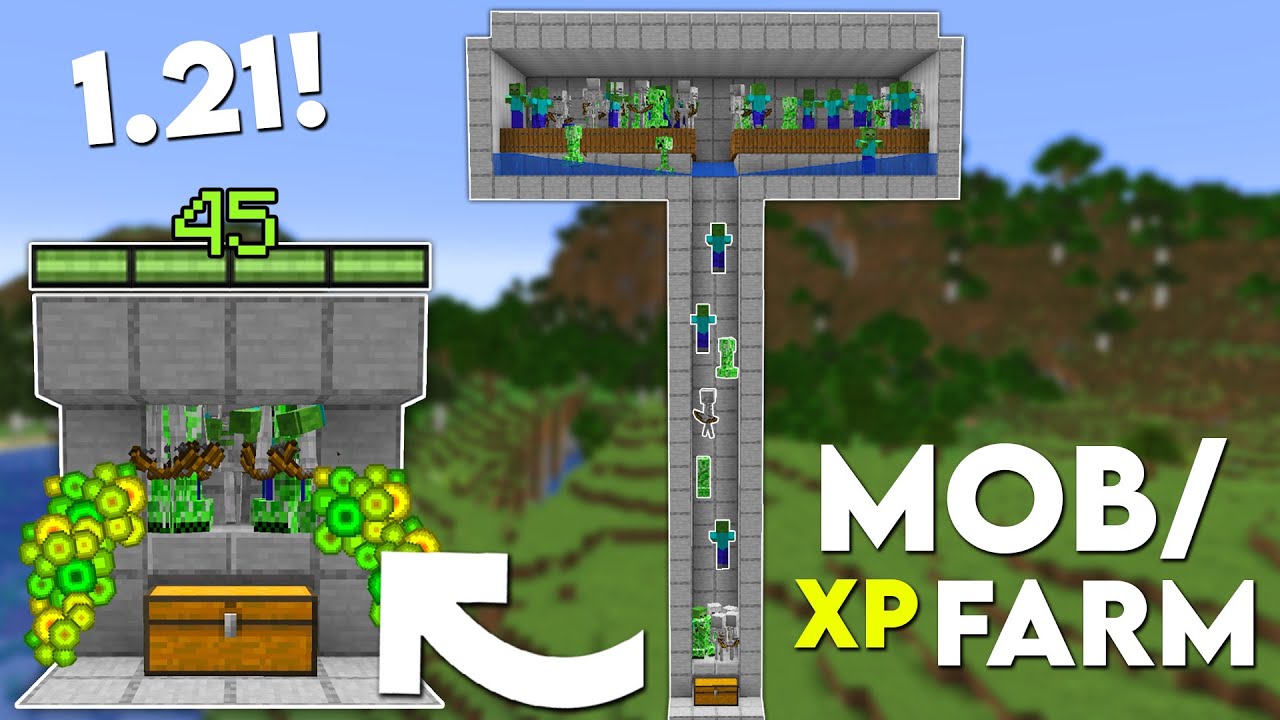
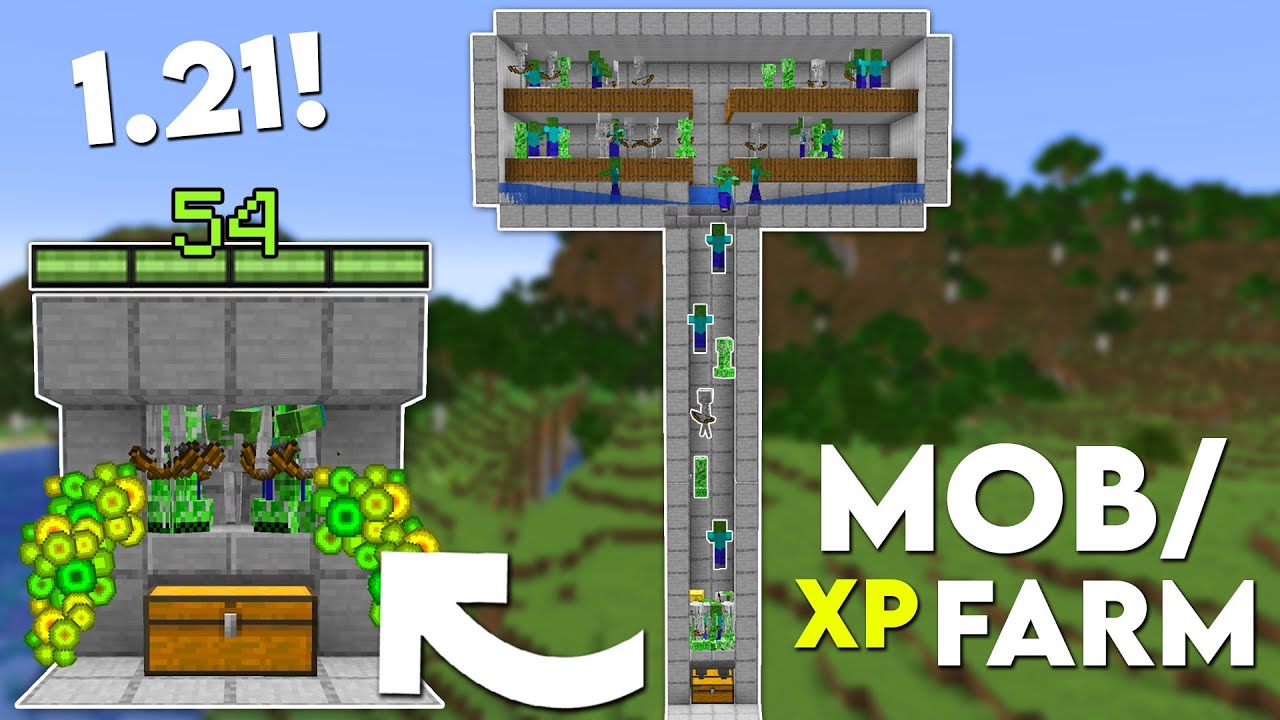
Instead of one platform, build several stacked platforms. Each platform spawns mobs, and water funnels them to a central chute.
Key Features
- Stacked platforms: 3–6 layers for more spawns. The more layers you have, the more mobs can spawn at once.
- Central drop chute: All mobs fall to the same spot. Makes killing and collecting drops easy.
- Efficient water channels: Mobs move quickly. Less waiting time means more XP per hour.
- AFK area: Stand where you trigger maximum spawns. Some farms put the player in the middle of the platforms for best rates.
Example Design
Build a tower with platforms every 3 blocks. Place water streams on each platform to push mobs to the center. Drop them 23 blocks, then finish them off with a sword. Some designs include ladders or bubble columns for easy player access.
Redstone-based Xp Farms
Redstone allows automation. You can use pistons, dispensers, or timers to control mob movement and killing.
Popular Redstone Features
- Automated crushers: Pistons kill mobs when you press a button. This reduces manual work and speeds up farming.
- Timed water flows: Dispensers release water to move mobs at intervals. Useful for controlling the rate at which mobs reach the kill chamber.
- XP collection systems: Hoppers and minecarts collect drops. Minecart hoppers are great for covering large areas quickly.
Redstone farms are more complex but can be more efficient and fun to build. You can also experiment with daylight sensors or observer blocks for even more advanced automation.
Spawner-based Xp Farms
Some structures contain mob spawners—blocks that spawn mobs when you’re nearby. These are found in:
- Dungeons (zombie, skeleton, spider spawners)
- Strongholds
- Nether fortresses (blaze spawners)
Spawner farms are powerful because the spawn rate is fixed and doesn’t depend on darkness. Even in well-lit areas, mobs will spawn from the spawner as long as the player is close enough.
Building Around Spawners
- Clear space: Remove blocks around the spawner. A 9x9x5 space is usually enough.
- Control spawns: Use water or trapdoors to funnel mobs. Water streams or channels can direct mobs to a central kill spot.
- Create a kill chamber: Mobs are sent to a place where you can kill them safely. Use slabs to prevent baby zombies or spiders from escaping.
- Collect XP and drops: Use hoppers and chests. Consider using a sorter if you want to separate bones, arrows, or special drops.
Spawner farms are especially useful in multiplayer servers, where multiple players can benefit at the same time.
Animal-based Xp Farms
While mob farms are the main source of XP, animal farms can be a good option for beginners or those who want a safer approach.
How Animal Farms Work
XP is gained by:
- Breeding animals
- Killing animals
- Cooking meat in furnaces
Cows, pigs, sheep, and chickens are easy to breed. Each breeding gives 1–7 XP. Killing animals gives a bit more XP, and cooking their meat in a furnace adds even more.
Setting Up An Animal Xp Farm
- Build a pen: Use fences to keep animals in. Gates let you enter and exit.
- Collect animals: Lead cows, pigs, sheep, or chickens into the pen. Wheat, carrots, or seeds will attract them.
- Feed animals: Use wheat for cows and sheep, carrots for pigs, seeds for chickens. Once fed, animals enter “love mode” and breed.
- Breed regularly: Wait for cooldowns and breed again. The more animals, the more XP you get.
- Harvest meat and drops: Kill animals as needed. Use a Looting sword for more drops and XP.
Animal farms don’t give as much XP as mob farms, but they provide food and resources. They’re also very safe, with little risk to the player.
Practical Tips
- Use automatic feeders: Dispense food with redstone. This saves time if you have lots of animals.
- Keep pens large: Prevent overcrowding. Too many animals in one place can cause lag and reduce breeding.
- Breed during downtime: It’s a good side activity while waiting for mobs. Multi-tasking boosts your overall XP income.
Credit: www.youtube.com
Resource-based Xp Farms
XP can also be farmed by processing resources. These farms are useful if you prefer mining or smelting.
Smelting Xp Farms
Smelting ores, food, or blocks in furnaces gives XP. Automatic smelting farms use hoppers and furnaces to process items and collect XP.
Example Smelting Farm
- Build a row of furnaces.
- Feed items in with hoppers.
- Collect XP by pulling items out of the furnace.
Cactus farms are popular because cactus is easy to grow and smelt. Since you can automate cactus farming, you get a steady XP flow with little effort.
Mining Xp Farms
Mining ores like coal, redstone, lapis, and nether quartz gives XP. You can build a mining farm in caves or the Nether.
Tips For Mining Xp
- Branch mine: Dig tunnels to find more ores. This increases your odds of finding valuable resources.
- Silk Touch: Use Silk Touch to collect ores, then break them later for XP. This lets you save ores for when you need XP.
- Fortune: Use Fortune to multiply drops. More drops mean more XP.
Mining farms are less automated, but you get valuable resources. For long-term worlds, branch mining is a great way to gather both XP and materials.
Fishing Xp Farms
Fishing gives XP and rare items. Automatic fishing farms use redstone and tripwire hooks to let you fish while AFK.
Building A Simple Fishing Farm
- Set up a fishing rod dispenser.
- Place a tripwire hook above water.
- Use redstone to trigger the rod.
- Collect fish and XP.
Fishing farms work in most Minecraft versions, but recent updates changed automation methods. Manual fishing is slower but still provides XP, enchanted books, and other treasures.
Comparing Xp Farm Types
Not all XP farms are equal. Each has strengths and weaknesses. Here’s a comparison table:
| Farm Type | XP/Hour | Difficulty | Materials | Safety |
|---|---|---|---|---|
| Mob Farm | ~1200–2500 XP | Medium | Building blocks, water, redstone | Risky |
| Spawner Farm | ~800–1800 XP | Hard | Spawners, water, redstone | Medium |
| Animal Farm | ~400–600 XP | Easy | Fences, food | Safe |
| Smelting Farm | ~500–700 XP | Easy | Furnaces, hoppers | Safe |
| Fishing Farm | ~300–500 XP | Medium | Redstone, fishing rod | Safe |
As you can see, mob farms are the best for XP, but they require more work and risk. If you want something simple and safe, consider animal or smelting farms.
Xp Farm Designs For Different Play Styles
Minecraft players have different goals. Some want maximum efficiency, while others want farms that look good or fit their base. Here are design ideas for various play styles.
Maximum Efficiency
If you want the most XP possible:
- Build in the sky to reduce ground spawns. This limits mobs spawning elsewhere.
- Use multiple platforms. More platforms mean more mobs.
- Add redstone automation. Less manual work means more consistent XP.
- Stand in the center for maximum spawn rates. Place an AFK spot in the best range.
Efficiency-focused players often build mob farms above the ocean or high in the sky, lighting up caves below for the best results.
Minimalist And Compact
For players with limited space or resources:
- Use a single spawner farm. These are small and powerful.
- Build in a cave or dungeon. Utilize existing structures.
- Keep platforms small (10×10 blocks). Less building required.
- Use simple water channels. Fewer resources needed.
A compact farm can be hidden in a base or even underground, making it ideal for survival worlds.
Decorative And Thematic
If you care about looks:
- Use themed blocks (wood, stone, glass). Match your base style.
- Build farms to look like towers, castles, or caves. Add detail and story.
- Hide mechanisms with walls or landscaping. Make the technical parts invisible.
Decorative farms might not be the most efficient, but they make your world feel alive and unique.
Multiplayer-friendly
For server play:
- Build farms far from spawn to avoid lag. Respect other players’ builds.
- Add safety features (lava traps, fences). Prevent accidents.
- Share drops and XP with friends. Build community storage.
- Use group AFK platforms. Multiple players can farm together.
Sharing an XP farm on a server can turn it into a social hub.
Redstone Lovers
For tech-focused players:
- Add piston crushers. Automate killing for XP and drops.
- Use daylight sensors to trigger mob movement. Time your farm’s activity.
- Automate drop collection with minecart systems. Gather more drops faster.
Redstone farms are challenging but rewarding, letting you experiment with Minecraft’s technical side.
Optimizing Your Xp Farm
A good XP farm can always be better. Here are tips to boost efficiency and avoid common pitfalls.
Light Control
- Keep spawn platforms dark (light level 7 or lower). Use slabs on roofs to stop spawns above.
- Light up surrounding areas to force mobs to spawn inside the farm. This includes nearby caves and surface spaces.
Spawn Rates
- Remove blocks around the farm to prevent unwanted spawns. This helps focus mob spawning where you want.
- Build above ground or in the Nether for higher spawn rates. The Nether has fewer spawn restrictions.
- Use slabs or carpets to block spawn points outside the farm. Simple and effective.
Afk Positioning
- Stand within 24–32 blocks of the farm. This keeps spawns active.
- Use glass or slabs to protect yourself while AFK. Prevents creepers or phantoms from attacking.
- Place beds and storage nearby for convenience. Quick respawn if you die.
Mob Movement
- Use water streams, trapdoors, or minecarts. Move mobs quickly.
- Avoid corners where mobs get stuck. Smooth paths mean more XP.
- Check for pathfinding bugs. Test with a few mobs to see if they move as planned.
Killing Chamber
- Use drop damage for one-hit kills. Safe and efficient.
- Add redstone crushers for automatic killing. Saves time.
- Use swords with Looting and Sweeping Edge for more drops. Enchanting boosts your rewards.
Drop Collection
- Install hoppers beneath kill chambers. Automatically gather drops.
- Connect hoppers to chests for storage. Prevents item loss.
- Use sorting systems if you want to organize drops. Makes finding items easier.
Server Performance
- Limit the number of mobs to avoid lag. Too many mobs can crash a server.
- Build farms away from popular areas. Reduce interference with other players.
- Use mob switches to control spawns. Turn farms on or off as needed.
Xp Farm Troubleshooting
XP farms can break or stop working if you miss small details. Here’s a troubleshooting guide.
Low Spawn Rates
- Check light levels. Use the debug screen (F3) to see light values.
- Make sure you’re close enough to the farm. Don’t go too far away.
- Remove torches or glowstone from spawn platforms. Darkness is key.
- Clear nearby caves and tunnels. Mobs spawning elsewhere reduce farm rates.
Mobs Not Dropping Xp
- If mobs die automatically (from fire or fall), you may not get XP. Always deal the final blow yourself, or use mechanisms that let you finish mobs.
- Some redstone crushers can be timed to leave mobs with one health, so you can finish them off.
Drops Not Collected
- Check hoppers for blockages. Items can get stuck if hoppers are full.
- Make sure chests are connected properly. Misplaced chests won’t collect drops.
- Avoid using blocks that block hopper movement (like carpets or slabs). Place them carefully.
Farm Not Working After Update
- Some farms break after game updates. Pistons or redstone may change.
- Check online guides for updated designs. The Minecraft community often shares fixes.
- Test farms in creative mode before building in survival. Saves time and resources.
Xp Farming In Different Minecraft Versions
Minecraft updates change mechanics. Farms that work in one version may not work in another.
Java Edition
- Most farms rely on water movement and redstone.
- Mob pathfinding is predictable.
- Fishing farms are easier to automate.
Bedrock Edition
- Mob spawning is different: Less predictable.
- Redstone is sometimes buggy.
- AFK fishing farms are harder to build.
Some farms need to be adjusted for your game version. For example, trident killer farms are common on Bedrock, while Java players use fall damage and swords.
Differences Table
Here’s a quick comparison:
| Feature | Java Edition | Bedrock Edition |
|---|---|---|
| Mob Spawning | Consistent | Random |
| Redstone Mechanics | Reliable | Sometimes buggy |
| Fishing Farms | Easy to automate | Hard to automate |
| Spawner Farms | Effective | Less reliable |
| AFK Farming | Safe | Risky (mobs can spawn nearby) |
Always check your version before building a farm. Some features may be missing or behave differently.
Xp Farm Safety Tips
XP farming can be dangerous. Hostile mobs can kill you if you’re not careful.
Stay Safe While Farming
- Use glass walls or fences to keep mobs in. Prevents escape.
- Keep weapons and food nearby. Be ready for attacks.
- Wear armor, especially when building or repairing farms. Protection saves lives.
- Add escape routes in case mobs break out. Ladders or water drops can help you escape quickly.
Afk Protection
- Build AFK rooms with doors and walls. Stay safe while away from the keyboard.
- Use beds to set your spawn point. Quick respawn if you die.
- Place torches to prevent surprise mob spawns. Light up your AFK room.
Server Security
- Lock farms with doors or redstone. Only allow trusted players access.
- Only share farms with trusted friends. Protect your hard work.
How Xp Farms Impact Gameplay
XP farms change how you play Minecraft. Instead of grinding for XP, you spend more time building, exploring, or fighting bosses.
Benefits
- Faster enchanting and repairs. Always have the best gear.
- More loot for trading or crafting. Use mob drops for bone meal, arrows, or TNT.
- Less time wasted on boring tasks. More fun activities.
Downsides
- Farms can cause server lag. Too many mobs can slow down the game for everyone.
- Some players see them as “cheating.” Decide what’s fair for your world.
- Farms take time and resources to build. Plan ahead before starting.
Non-obvious Insights
- XP farms can be combined with loot farms. For example, a skeleton farm gives bones and arrows as well as XP. These drops can be used for farming, crafting, or trading.
- You can use XP farms to level up villagers. Trading with villagers near your farm lets you get rare items faster. Some players build trading halls next to their XP farms for maximum efficiency.
- Villager curing: Zombie farms make it easy to cure zombie villagers with golden apples and potions, opening up discounts in trading.
- Use mob drops for automatic crop farms: Bones from skeletons can be turned into bone meal for instant crops.
Xp Farm Upgrades And Automation
Once you have a working XP farm, you can upgrade it for more efficiency or automation.
Redstone Upgrades
- Add piston crushers for automatic killing. Time them to leave mobs with a sliver of health.
- Use dispensers to drop water or lava. Move mobs or clear out the chamber.
- Install timers for regular mob movement. Keep the farm running smoothly.
Storage Upgrades
- Add sorting systems for drops (bones, gunpowder, arrows). Quickly find what you need.
- Use minecart hoppers for large farms. Efficiently move items to storage.
Afk Enhancements
- Build AFK rooms with beds, storage, and armor stands. Stay safe and organized.
- Use daylight sensors to trigger farm activity. Run the farm only during the day, or only at night.
Integration With Other Farms
- Combine XP farms with crop farms or villager trading halls. Centralize your resources.
- Use drops (bones, gunpowder) to fuel other activities. For example, gunpowder can be used for rockets.
Xp Farming For Enchanting And Repairs
XP is mainly used for enchanting gear and repairing tools.
Enchanting
- Use XP to enchant swords, armor, and tools. Better gear helps you survive and explore.
- Higher levels mean better enchantments. Aim for at least level 30 for top enchants.
- Use an enchanting table and bookshelves. More bookshelves mean more enchantment options.
Repairing
- Anvils let you repair items for XP. Combine tools or add enchanted books.
- Combining two damaged items saves resources and keeps enchantments.
Practical Example
Farm XP, enchant your pickaxe, mine more efficiently, then repair your pickaxe with XP from the farm. This cycle keeps your gear in good shape with minimal resources.
Best Locations For Xp Farms
Location matters. Here’s where to build for best results:
- Sky: Build above ground to reduce other spawns. Best for efficiency.
- Caves: Use abandoned caves for spawner farms. Easy to set up early in the game.
- Nether: Hostile mobs spawn quickly in the Nether. Blaze farms are great for XP.
- End: Enderman farms are powerful for XP. High returns, but more dangerous.
Choosing The Right Spot
- Look for areas with few competing mobs. Fewer spawns elsewhere means more in your farm.
- Build near your base for convenience. Easy to visit often.
- Avoid crowded server areas to prevent lag. Respect other players.
A less obvious location tip: building a farm over an ocean can reduce land mob spawns, making your farm even more efficient.
Xp Farm Efficiency Statistics
How much XP can you really get? Here are some real numbers:
- Basic mob farm: 1200–2500 XP per hour
- Spawner farm: 800–1800 XP per hour
- Animal farm: 400–600 XP per hour
- Smelting farm: 500–700 XP per hour
- Fishing farm: 300–500 XP per hour
A well-designed farm can give you enough XP for dozens of enchantments. Some top-tier Enderman or blaze farms can even reach 10,000 XP per hour with perfect optimization.
Credit: www.bisecthosting.com
Xp Farm Maintenance
Farms need regular care to stay effective.
Regular Checks
- Test spawn rates every few days. If numbers drop, check for lighting or block changes.
- Repair broken redstone or traps. Mobs can break parts of your farm.
- Empty chests and storage. Full chests can block new drops.
Upgrades
- Add more platforms if spawn rates drop. Expand as you get more resources.
- Upgrade killing chambers as you find better designs. Keep up with new Minecraft updates and ideas.
Server Updates
- Watch for Minecraft updates that change mechanics. Stay informed with patch notes.
- Update your farm as needed. Sometimes a small tweak can restore full efficiency.
Community And Online Resources
The Minecraft community is full of creative XP farm designs. You can find tutorials, videos, and forums.
- Check YouTube for farm ideas.
- Visit Reddit or Discord for advice.
- Read guides on the Minecraft Wiki (Minecraft Wiki).
Learning from others can help you avoid mistakes and discover new tricks. Don’t be afraid to experiment and make a farm that fits your style.

Credit: www.reddit.com
Frequently Asked Questions
How Do I Get Xp Quickly In Minecraft?
The fastest way is to build a mob-based XP farm. These farms spawn and collect mobs automatically so you can kill them for XP. Smelting and breeding also work but are slower.
Can Xp Farms Be Built In Creative Mode?
Yes, you can build XP farms in creative mode for testing. However, you won’t earn XP in creative. Switch to survival to farm XP.
What’s The Safest Xp Farm Type?
Animal farms and smelting farms are the safest. Hostile mob farms are risky but more rewarding. Always build safe kill chambers and AFK rooms.
Do Xp Farms Work On Multiplayer Servers?
Most XP farms work on servers, but you need to consider server lag and spawn limits. Build farms away from popular areas and coordinate with other players.
Why Am I Not Getting Xp From My Farm?
If mobs die automatically (from fire or fall), you may not get XP. You must deal the final blow yourself, or use mechanisms that let you finish mobs.
Minecraft is a game of endless possibilities. XP farms unlock new powers and speed up your progress. Whether you’re a beginner or a seasoned player, building a good XP farm can transform your world. The best farms are efficient, safe, and fit your play style.
Try different designs, learn from the community, and keep upgrading. Experience points are the key to stronger gear, faster mining, and more fun. With the right XP farm, you’ll always be ready for the next adventure.